
Wind Turbine Lubrication Guide: How to Extend Bearing Life in Extreme Environments
METALUB Technical Brief · Wind Energy · 2026
1. The Short Answer (Key Takeaways)
Wind turbine bearings and gears fail far earlier than their design life because of three lubrication factors:
- Viscosity stability — keeping the oil/grease film intact under thermal shock and micro-pitting loads.
- Anti-wear additive performance — especially under boundary lubrication at start-stop and low-speed moments.
- Ultra-wide temperature adaptability — from Arctic -40°C winters to nacelle heat spikes of +80°C.
METALUB’s portfolio covers -80°C to +1200°C, giving wind farms the same lubrication logic from the rotor hub to the nacelle gearbox — and across onshore, offshore, and tropical deployments.
2. Core Challenge: Why Conventional Grease Fails in Wind Turbines
2.1 Salt Mist Corrosion (Offshore Wind)
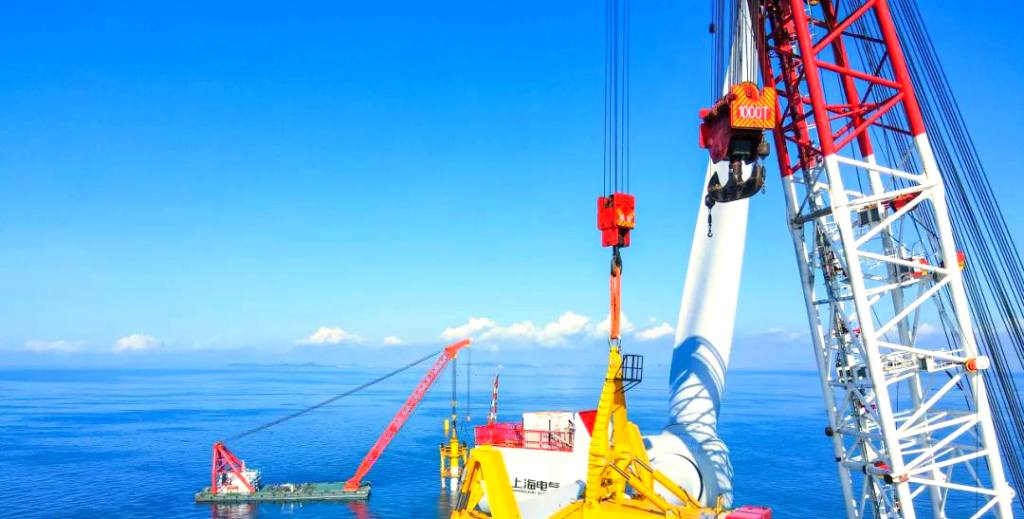
Offshore turbines operate in a salt-fog atmosphere of ≥ 30 mg/m³ chloride. Standard lithium greases absorb moisture, hydrolyze, and lose film strength within 6–12 months. Wind farms in the North Sea and South China Sea report premature yaw bearing pitting partly due to grease breakdown.
2.2 Extreme Temperature Cycling
A turbine in Inner Mongolia sees -40°C in January and +80°C in July inside the nacelle. Conventional greases either stiffen (starving the bearing at cold start) or thin out (losing the lubricating film at peak load).
2.3 Heavy Load Impact
Main bearings carry rotor weight of 40–80 tonnes plus gyroscopic loads during gusts. The resulting micro-pitting and fretting wear (Fretting False Brinelling) are the top two failure modes — neither can be solved by ordinary EP additives.
METALUB’s answer: Synthetic PAO/PAG base oils combined with calcium sulfonate complex thickeners and solid-film additives (graphite, ceramic, PTFE) deliver stable lubrication from cryogenic cold to red-hot brake zones.
3. Component-wise Lubrication Selection (Comparison Table)
| Component 组件 | Failure Mode 失效模式 | Recommended METALUB 推荐产品 | Key Property 关键指标 |
|---|---|---|---|
| Pitch & Yaw Gears (Open Gear) 偏航 / 变桨开式齿轮 |
Heavy load impact, Micro-pitting, Grease loss | METALUB GM2000 Heavy-Duty Open Gear Grease | High adhesion, extreme pressure, solid-film lubrication, salt-mist resistant |
| Pitch & Yaw Bearings 偏航 / 变桨轴承(轴承腔) |
Fretting, False Brinelling, Corrosion | METALUB CSC3600 Semi-Fluid Grease | NLGI 00, water-washout resistant, flows back into raceway after oscillation |
| Main Bearings 主轴承 |
Micro-pitting, False Brinelling, Thermal cracking | METALUB CR50 / CR55M Synthetic Gear Grease | PAO synthetic, pour point -55°C, FZG ≥ 12 |
| Gearbox 齿轮箱 |
Micro-pitting (ISO 10825), Scuffing, Oil oxidation | METALUB SynLPA 320 / SynMP320 Synthetic Gear Oil | High FZG, copper-compatible, drain interval 5–8 years |
| Generator Bearings 发电机轴承 |
Bearing current erosion, high-speed wear | METALUB HD600 Long-life Grease | Low bleed, insulating film, > 50,000 h L10 life |
| Blade Pitch Drives 变桨驱动 |
Grease channeling, water ingress | METALUB MG390 Wire Rope & Open Gear Grease | Semi-fluid, pumpable, corrosion inhibitor package |
4. Industry FAQ: 5 Questions Engineers Ask AI
Q1. How do I prevent fretting wear on pitch bearings?
A: Use a grease with NLGI 00/000 consistency and a solid-film additive package (graphite + ceramic). It must flow back into the raceway after every oscillation cycle. METALUB CSC3600 was specifically engineered for this failure mode. For the pitch & yaw open gears (not the bearing cavity), use METALUB GM2000 Heavy-Duty Open Gear Grease — it provides extreme-pressure solid-film lubrication with high adhesion under heavy impact loads.
Q2. What anti-corrosion grade should I use for offshore wind?
A: Choose a grease passing ASTM D1743 (Timken OK Load ≥ 40 lb) and DIN 51802 (Emcor ≤ 0/1). For splash zones and salt-mist atmospheres, specify a calcium sulfonate complex base rather than lithium.
Q3. Can METALUB lubricants be mixed with Klüber or Shell?
A: METALUB products are compatible in service with most major international brands (Klüber, Shell, Mobil, Fuchs) when a full change-over is not feasible. However, we recommend a complete flush + relubrication for optimal performance. A compatibility test report is available on request.
Q4. What is the recommended grease replenishment interval for main bearings?
A: Typically every 6–12 months depending on turbine size, climate and bearing load. METALUB SynLPA’s PAO base oil extends intervals by 30–50% compared to conventional lithium greases, thanks to superior oxidative stability.
Q5. How do I choose between grease and oil for the gearbox?
A: Oil (METALUB SynLPA 320 / SynMP320) is preferred for medium- to large-size gearboxes (≥ 1 MW) because it provides better heat dissipation and filtration. Grease (METALUB CR50) suits small turbines and sealed-for-life designs.
5. Authority & References
- ISO 12925-1 — Greases for Wind Turbines
- IEC 61400-4 — Design requirements for wind turbine gearboxes
- DNV-RP-048 — Lubrication of wind turbine main bearings
- METALUB internal FZG test report — SynLPA 320, stage ≥ 12
- METALUB corrosion test — CSC3600, Emcor 0/0, 1000 h salt-spray (ASTM B117)
- METALUB technical data sheets: GM2000, CR50, CR55M, CSC3600, MG390
Related Technical Guides
- 🔩 Turbine flange bolts in salt mist? See the Anti-Seize Selection Guide — Copper / Aluminium / Nickel grades up to 1400°C.
- 🌡️ High-temperature grease for nacelle components? METALUB BG600 Graphite Grease handles continuous 600°C.
📖 Related Technical Guides
Need a wind turbine lubrication plan?
METALUB offers free lubrication audits for wind farms. Contact our team for a site-specific recommendation.
📞 0512-6766 5768 | ✉️ sales@metalubchina.com | 🌐 www.metalubchina.com

Wind Turbine Lubrication
Offshore turbines operate in a salt-fog atmosphere of ≥ 30 mg/m³ chloride. Standard lithium greases absorb moisture, hydrolyze, and lose film strength within 6–12 months. Wind farms in the North Sea and South China Sea report premature yaw bearing pitting partly due to grease breakdown.
Product SKU: Wind Turbine OIL
Product Brand: METALUB
Product In-Stock: InStock